
Título Principal Cativante
Introdução
When I first heard about compound growth I thought it was some financial myth—like a get-rich-quick slogan. Turns out, it’s neither mystical nor instant; it’s quietly relentless. Over years, compounding can turn small, seemingly insignificant actions into meaningful wealth or scalable business impact. And if you let time do the heavy lifting, results surprise you in a very pleasant way.
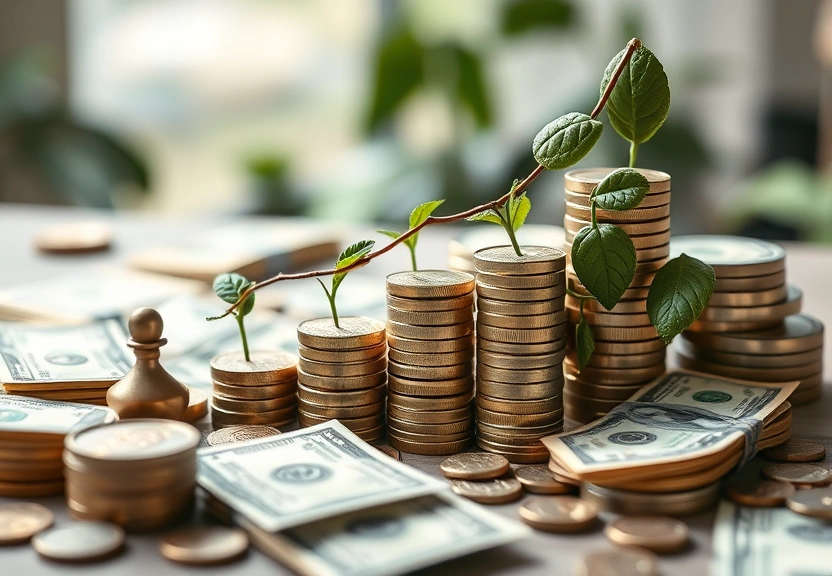
So what exactly makes compound growth so powerful? Well, it’s the idea that returns generate returns. You earn on your original investment and then you earn on those earnings. Sounds simple, right? Yet so many beginners overlook this. Funny thing: people chase vanity metrics in business, while neglecting the slow-building engine of compound growth that actually matters.
In this article I’ll walk you through why compound growth matters for businesses and investors, explain core concepts like compound interest investing and compounding returns explained, and share practical strategies you can use tomorrow. I’ll also sprinkle in blunt opinions and real-world tips—because dry theory rarely changes behavior.
Desenvolvimento Principal
Compound growth shows up in two big ways: financial compounding and operational compounding. Financial compounding happens when interest, dividends, or capital gains are reinvested. Operational compounding occurs when improvements—better processes, customer retention, brand recognition—build on themselves and lower marginal costs over time. Both are about momentum, and momentum compounds faster than most people expect.
Let’s break down the financial side first. Compound interest investing is the classic example: invest an amount, earn a percentage each period, and reinvest those earnings. Over decades, that single formula can produce exponential results. But here’s the kicker—time is the multiplier. Start early and you benefit not only from returns but from returns-on-returns. That’s where the magic truly happens. If you start at 25 instead of 35, the gap at retirement can be massive.
On the business side, think about customer lifetime value (LTV). Retain customers a little longer, and each customer delivers more value. Improve onboarding by 10% and referral rates tick up; those referrals bring lower acquisition costs, which you reinvest into better product development. That cascade is compound growth in action. And yes, a small operational improvement repeated consistently beats a flashy but short-lived tactic any day.
Compounding mechanics: the simple math
At heart, compounding is arithmetic with a twist of patience. The formula for compound interest is straightforward: A = P (1 + r/n)^(nt). But you don’t need to memorize it to use the idea. What matters is understanding that higher frequency of compounding (n) and longer time (t) multiply the effect. And while many obsess over tiny percentage differences, the real leverage often comes from increasing time or reinvesting returns consistently.
- Reinvestment: Put earnings back to work.
- Consistency: Small, regular contributions beat sporadic bursts.
- Time: The longest time horizon you can tolerate wins.
🎥 Vídeo relacionado ao tópico: The Power of Compound Growth in Business and Investing
Análise e Benefícios
There are tangible benefits to embracing compound growth. For investors, it reduces the need to time the market—consistent investing plus reinvested dividends smooths volatility. For entrepreneurs, compounding creates durable advantages; brands, customer ecosystems, and proprietary processes become harder for competitors to replicate once they’ve accumulated enough momentum. I’ve seen startups with modest beginnings become category leaders because they compound small wins for years.
And let’s be honest—compounding also teaches a valuable psychological lesson. It rewards patience and penalizes noise. When you accept slow-but-certain gains you avoid the emotional rollercoaster of chasing fads. That said, you still need to be active in choosing where to compound. Blindly reinvesting in a poor business or a losing strategy compounds losses just as effectively as gains.
Here’s another benefit that doesn’t get enough airtime: optionality. As your assets or business scale through compounding, you unlock choices. Want to pivot, take a sabbatical, or invest in moonshot ideas? Compounded resources give you that freedom. And freedom, I’d argue, is one of the most underrated returns of all.
Implementação Prática
Okay, you’re sold—now what? Start by prioritizing the basics. If you’re new to this, learn the importance cash para iniciantes—yes, even as a mantra. Having accessible cash means you can stay invested during downturns, avoid forced selling, and seize compounding opportunities when others panic. Think of cash as your optionality fuel.
Next, design a system that favors reinvestment. For investors, automate contributions into index funds or dividend reinvestment plans (DRIPs). For business owners, set a policy: a fixed percentage of monthly profits goes to R&D, customer success, or scaling retention programs. This disciplined reinvestment is the practical heartbeat of compound growth strategies. No drama, just repeated action.
And don’t ignore diversification and risk management. Compounding works best when the underlying engine is resilient. So rebalance portfolios periodically, and in business, protect your core revenue streams while experimenting with controlled bets. I’ve personally used a “70/30” rule at times—70% conservative growth and 30% higher risk innovations. It kept the lights on while letting us chase breakthroughs.
- Automate contributions and reinvestments.
- Bank cash buffers—three to six months for individuals, more for startups.
- Focus on retention and process improvements that scale.
- Measure compounding KPIs: LTV, churn trends, organic growth rates.

Perguntas Frequentes
Pergunta 1
How quickly will compound interest make me rich? The short answer: it depends. Rate of return, contribution size, and time horizon are the three levers. Compound interest investing will significantly grow wealth over decades, but it’s not a shortcut. If you want faster growth, increase contributions or accept higher risk—but know that higher risk can also compound losses.
Pergunta 2
Is compounding safe for small businesses? Yes, with caveats. Operational compounding—improving processes, customer experience, and retention—carries relatively low downside and high upside. Financial compounding through reinvested profits is smart, but businesses should keep cash reserves to weather downturns. Remember the phrase importance cash para iniciantes? For businesses, that translates into an emergency runway before aggressive reinvestment.
Pergunta 3
What’s the difference between compounding returns explained and simple returns? Simple returns pay you only on the principal: you get the same dollar amount each period. Compounding returns explained means you earn on earlier returns as well. Over time, compounding accelerates growth in a way simple returns cannot. It’s the difference between climbing a hill and riding an accelerating escalator.
Pergunta 4
Can compounding work with debt? Yes, but be careful. When interest compounds against you—like high-interest credit card debt—it’s dangerous. On the flip side, if you can borrow cheaply and invest the proceeds at a higher sustainable return, compounding can amplify gains. That’s a strategic move and requires discipline and risk management.
Pergunta 5
What are some practical compound growth strategies for investors? Start with low-cost index funds and automate contributions. Use dividend reinvestment, increase savings rate annually, and avoid emotional trading. Combine that with tax-efficient accounts where compounding can happen sheltered from taxes. Small steps, repeated, are mighty.
Pergunta 6
How do companies measure compounding in their business? Common metrics include customer lifetime value (LTV), churn rate, revenue per customer, and organic growth ratios. Track how each improvement influences these metrics over time. If a small change consistently raises LTV, that’s compounding in motion—double down on it.
Conclusão
Compound growth is less about fireworks and more about patient engineering. Whether you’re building a business or investing for decades, the principle is the same: reinvest intelligently, protect optionality with cash, and be consistent. I’ve seen people transform modest resources into meaningful freedom simply by respecting the math and resisting short-term impulses.
So ask yourself: what small improvement can you make today that, if repeated, would build momentum? Start there. And if you’re feeling tempted to chase the next shiny pivot, remember this: compounding rewards the boring, the steady, and the disciplined. It rewards time—and if you give it time, it will reward you back.